.png)
Ayurvedic
Ayurvedic
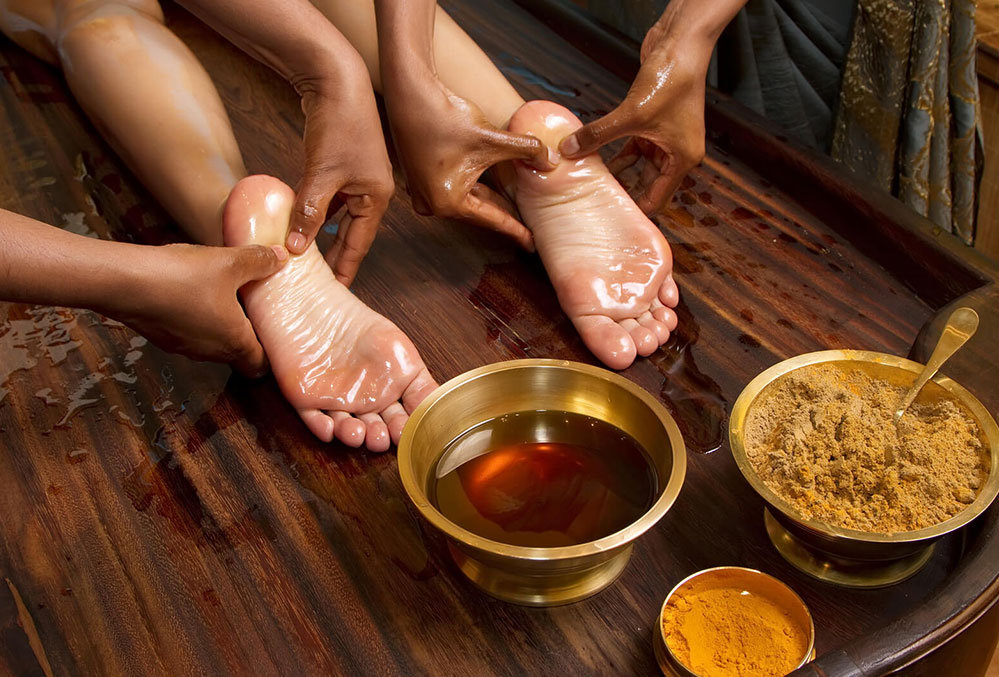
What is Ayurvedic Massage?
Ayurvedic massage is a traditional Indian healing practice based on Ayurveda principles. It involves the use of warm herbal oils and specific techniques tailored to the individual’s dosha (body type). The massage aims to balance energies, improve circulation, and release toxins. Ayurvedic massage also promotes relaxation, relieves muscle tension, and enhances overall well-being, aligning mind, body, and spirit.
The steps involved in a Ayurvedic Massage are as follows:
- 1.Client Assessment: The therapist determines the individual’s dosha (body type) through a consultation to customize the massage.
- 2.Oil Selection: Warm herbal oils are chosen based on the client’s dosha and specific needs.
- 3.Client Preparation: The client undresses to their comfort level and lies on a massage table, draped with a sheet.
- 4.Application of Oil: The therapist begins by massaging the entire body with warm herbal oils, using long, rhythmic strokes.
- 5.Marma Points: Specific pressure is applied to marma points (energy centers) to balance energy flow.
- 6.Stretching and Manipulation: Gentle stretching and joint manipulation may be incorporated to enhance flexibility.
- 7.Focus Areas: The therapist spends extra time on areas of tension or concern identified during the assessment.
- 8.Closing: The massage concludes with a brief period of relaxation, allowing the oils to penetrate the skin.
Benefits of Ayurvedic Massage
Balances the doshas (body energies) for overall well-being.
Relieves muscle tension and improves flexibility.
Enhances blood and lymphatic circulation.
Promotes relaxation and reduces stress.
Harmonizes mind, body, and spirit.
Releases toxins and supports detoxification.
Improves skin health and nourishment.
Boosts the immune system.
Restores energy and vitality.